
Custom Furniture Manufacturing: From Design to Industrial Production
In this article, we review the main stages that turn an idea into a product ready for reliable industrial manufacturing.
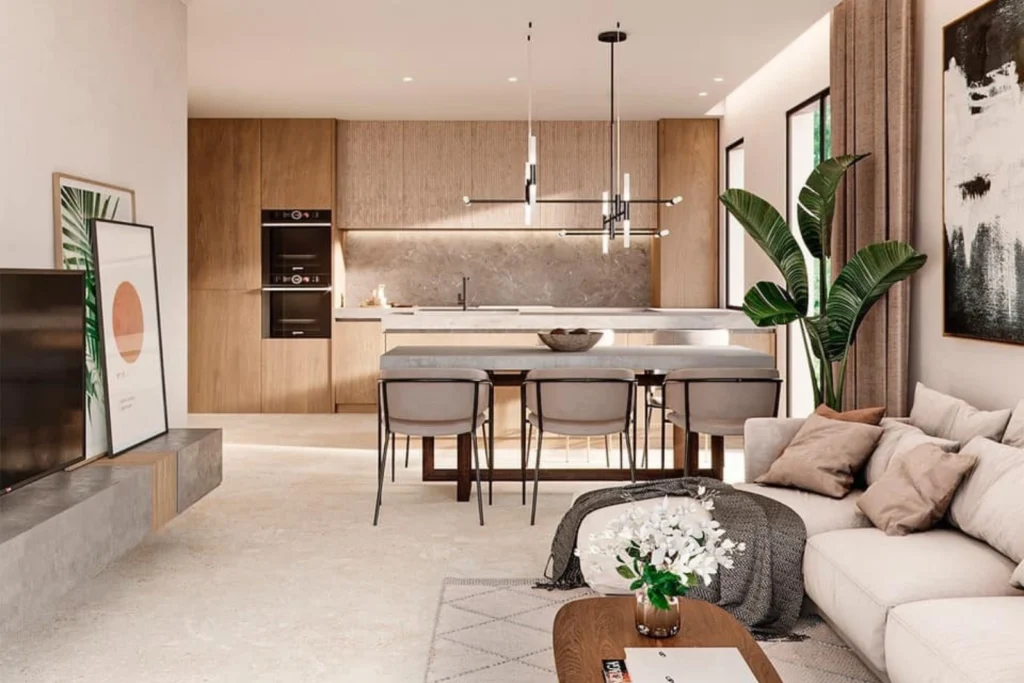
When we talk about custom furniture, we tend to think about the final result: a hotel reception, a guest room, a display unit or a perfectly executed commercial space.
However, between the first drawing and the finished and installed piece of furniture, there is a technical process that determines much of the project’s success.
Custom furniture manufacturing is not simply about producing a piece according to its design. It requires assessing its feasibility, adapting construction solutions, selecting the right materials and coordinating each stage of production so that the final result meets both aesthetic and industrial requirements.
What is custom furniture manufacturing?
Custom furniture manufacturing involves developing and producing pieces specifically designed for a particular project, adapting them to its functional, aesthetic and technical requirements.
Unlike standard furniture, there is no fixed catalogue. Each project presents new challenges related to dimensions, materials, finishes, intended use or installation conditions.
For this reason, the success of the project depends not only on the design, but also on the ability to turn that proposal into an industrially viable product.
From design to technical development: where manufacturing really begins
Design marks the beginning of the project, but it does not yet represent a product that is ready to manufacture.
Before production begins, each piece needs to be studied from an industrial perspective. This work makes it possible to assess the feasibility of the design, define manufacturing processes, select the right fittings and anticipate potential issues before they reach the workshop.
From drawing to product
A drawing defines the design intent, but it does not always contain all the information required to manufacture a piece of furniture.
During this stage, it is common to develop construction details, review tolerances, define joining systems or adapt certain elements to facilitate production without altering the original proposal.
Adapting the design without losing its essence
Industrialisation is not about simplifying a design, but about finding the best way to manufacture it.
When technical development is carried out correctly, the result maintains the identity of the project while optimising manufacturing times, repeatability and quality. This preliminary analysis is part of Bustper’s working method to ensure the industrial feasibility of each project.
Material selection: a decision that is more technical than aesthetic
Material selection directly influences how furniture performs throughout its service life.
It is not simply a matter of choosing an attractive finish. It is also necessary to consider factors such as wear resistance, dimensional stability, maintenance, machinability and the conditions of the space where the furniture will be installed.
A single project may combine wood, technical boards, metal structures, glass, solid surfaces or specific fittings. The combination of these materials must respond both to the design and to the manufacturing and assembly processes. Bustper approaches material selection from a technical perspective based on use, durability and manufacturing feasibility.
Validation before production: a key step in preventing most issues
One of the greatest risks in any project is moving directly from design to production.
When the project requires it, producing a prototype or sample makes it possible to check finishes, dimensions, joints and construction solutions before starting serial production.
Identifying problems while they can still be solved
Small adjustments made during this stage can prevent much more costly modifications once production is already underway.
In addition to reducing risks, this validation provides greater confidence for both the manufacturer and the customer, as it makes it possible to confirm that the final result will meet the initial expectations. Bustper incorporates this stage through prototypes or samples whenever the project requires it.
How industrial furniture production is carried out
Once the project has been validated, manufacturing begins.
Depending on the type of furniture and the materials used, different processes may be involved, such as CNC machining, cutting, edging, moulding, varnishing, assembly or dimensional inspection.
The key is not only to have the right machinery, but to coordinate all these processes in order to maintain quality and repeatability throughout production.
Integrating different stages within the same industrial structure makes this control easier and helps reduce variations between units. Bustper manages processes such as machining, assembly and finishing internally, helping to ensure traceability and consistency in the final product.
Logistics and installation are also part of manufacturing
Although they are often considered separate stages, logistics and installation begin to be planned long before the furniture leaves the factory.
The dimensions of each piece, protection during transport, assembly sequence and delivery order should all be considered during technical development to prevent issues later on.
Approaching the product from this perspective makes it possible to optimise both transport and installation, particularly in contract projects where deadlines and coordination with other trades are critical. Bustper’s experience in assembly and installation directly influences how each project is developed and manufactured.
Why involve the manufacturer from the beginning of the project?
The reason is simple. The earlier the manufacturer becomes involved, the more value they can add.
Their knowledge is not limited to manufacturing components. It can also help identify risks, optimise processes, select suitable materials and propose solutions that facilitate production, transport and installation.
Early collaboration allows design and manufacturing to work as a single team, reducing uncertainty and improving project execution without compromising the creative proposal.
In short, custom furniture manufacturing begins long before the machines are switched on.
Every decision made during technical development, material selection, validation or logistics planning has a direct impact on the quality of the final result.
That is why the strongest projects are not simply those that start with a good design, but those that incorporate an industrial perspective from the earliest stages of development. When design, engineering and manufacturing move forward in coordination, the project gains efficiency, reliability and execution capability.
Do you have a furniture project underway?
At Bustper, we work from two complementary approaches: development and manufacturing for contract projects, and industrial manufacturing for brands looking for a reliable production partner.
Tell us what you need and we will assess how we can help.